
To imagine how people lived in the eighteenth and nineteenth centuries is also to imagine how spaces were inhabited. Interiors were not conceived as decoration in the modern sense, but as environments where daily life, social rituals and personal identity quietly unfolded. Colors, textiles, furniture and the arrangement of rooms formed a language through which a household expressed its place in the world.
During the eighteenth century, particularly in aristocratic Europe, the interior of a house was closely tied to sociability. The salon became the heart of domestic life: a space for conversation, music, literature and visits. Walls were often covered with wood paneling, textiles or early decorative papers, while mirrors were used to amplify natural light and extend the sense of space.
The Rococo period introduced interiors filled with movement and delicacy. Curved lines, asymmetrical ornament and light decorative motifs created rooms that felt animated and elegant at the same time. Later in the century, Neoclassicism brought a different sensibility. Inspired by classical antiquity, it favored balance, proportion and restraint, replacing exuberance with calm architectural clarity.
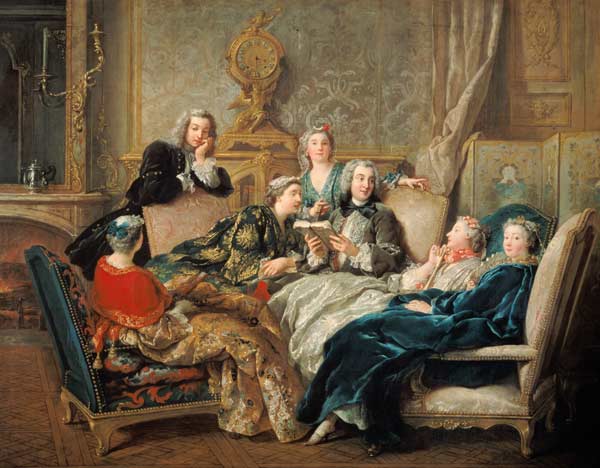
The palette of the eighteenth century tended toward luminosity. Soft blues, pale greens, creams and muted pastels appeared alongside marble surfaces and discreet gilded details. Textiles played an essential role in these interiors. Silks, damasks and tapestries added texture, warmth and acoustic comfort, while also reflecting the craftsmanship of the time.
Furniture followed the same logic of balance between use and refinement. Chests of drawers, consoles, upholstered chairs and elegant tables were designed not only for practical function but also for the rituals of everyday life. These objects were meant to be lived with — touched, used and integrated into the rhythm of the home.

The nineteenth century introduced a profound transformation in domestic interiors. With the Industrial Revolution, decorative goods became more widely available and the home gradually acquired a more personal and expressive character. Interiors became denser, more layered, reflecting both technological change and a new understanding of private life.
Victorian spaces, for example, were often richly composed. Wallpapers with floral or geometric patterns covered the walls, heavy curtains framed the windows and furniture became more solid and ornamented. Rooms accumulated objects, textiles and decorative elements, creating interiors that felt intimate, protective and visually complex.
The color palette also deepened. Greens, burgundy reds, dark blues and earthy tones became common, often contrasted with lighter moldings and subtle gilded details. Carpets covered much of the floor, while fabrics softened the architecture and brought warmth to the room.
At the same time, the organization of the house began to shift. While the salon remained a space of representation, the nineteenth-century home increasingly created smaller environments for private activities. Corners dedicated to reading, music or writing appeared, reflecting a growing emphasis on family life and individual reflection.

Across both centuries, the house was never merely a shelter. It was a stage for social life and a reflection of identity. Every material, every piece of furniture and every textile contributed to a carefully constructed atmosphere.
Seen from today, these interiors reveal something essential: furniture and objects were never simply decorative. They carried the memory of the people who lived with them and the quiet gestures of everyday life. In their proportions, their materials and their patina, they remain witnesses to another way of inhabiting space.