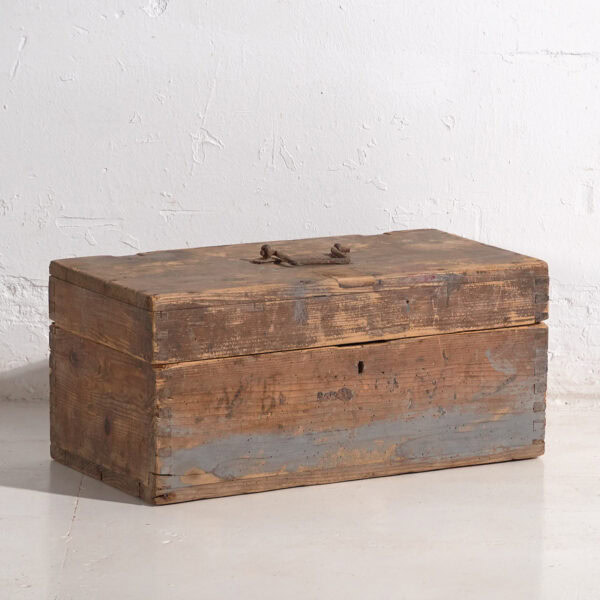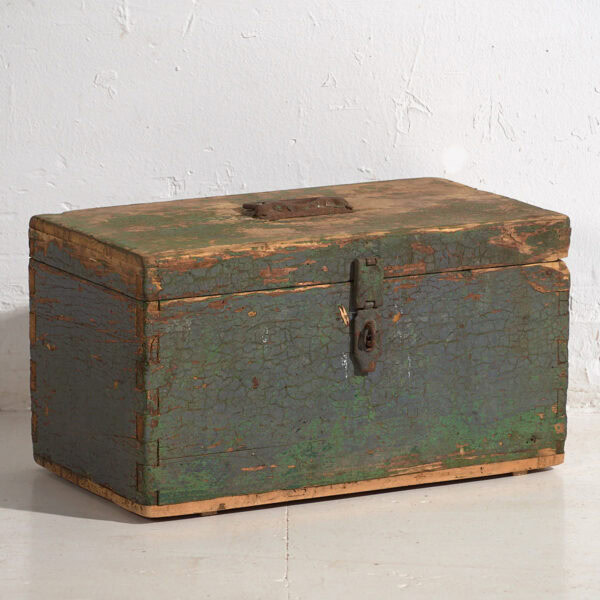


Antique Japanese chest with iron lock, of elongated rectangular form and hinged top on forged pin hinges, with a hasp lock and a base apron cut in cloud silhouette. It originates from Japan, from the late Edo or early Meiji period, when locking chests kept deeds, contracts and coin reserves in bourgeois houses and merchant warehouses.
This typology — generically called hako-bako — articulated the domestic economy of pre-industrial Japan. The hand-forged iron lock, with riveted plate and male hook, gave reasonable security against everyday theft; the openwork apron at the base, cut in a cloud silhouette, contributed the only decorative element of the whole.
It is built in solid wood of warm tone, with fronts and sides joined by exposed dovetail and the lid mounted on two flat forged pin hinges. The front bears a rectangular iron plate with hasp closure and ringbolt, with its original key still preserved. The lower apron, cut in ruyi cloud silhouette, rests on two squared feet at each end.
The patina is warm and quiet, with the wood darkened by years of handling, stable rust on the hardware and small wear on the edges. The original key, perforated and hand-forged, is in good condition and operates the lock smoothly.
It sits naturally in wabi-sabi, japandi or contemporary eclectic interiors. It works as a tabletop chest for correspondence and personal effects, as a standalone piece on a low cabinet, or as a box for jewellery, where the openwork apron and forged lock act as the only graphic accent.
Details
- Dimensions: Length 41 cm – Width 23 cm – Height 20 cm
- Style: Traditional Japanese, late Edo / early Meiji
- Materials and techniques: Solid wood; hand-forged iron lock, hasp and pin hinges; exposed dovetail joinery; openwork apron in ruyi cloud silhouette.
- Place of origin: Japan
- Period: Late Edo / early Meiji
- Date of manufacture: Circa 1880
- Condition: Good. Original key preserved. Some scratches or other signs consistent with use. Wear consistent with age and use.
This piece is part of the curated collection of Amaru Antiques, Barcelona.
ONE OF A KIND PIECE