

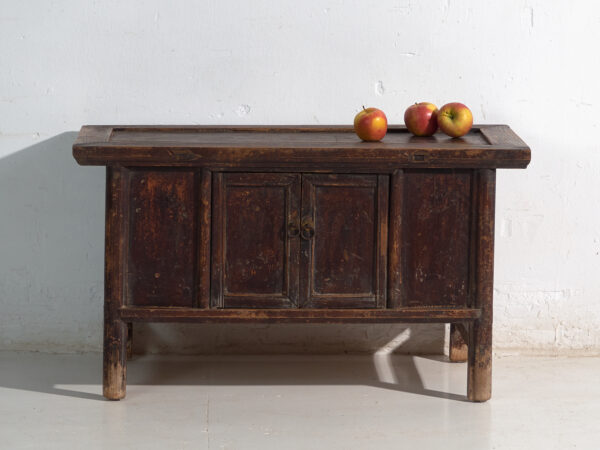


This antique Chinese low altar cabinet in solid wood with dark lacquer, with two central doors and blind sides, is a domestic piece from northern China around 1900.
Low cabinets with central doors — heirs to kang tables and portable altars — belonged to the rural living room in the late Qing and early Republican periods. Their moderate height suited use seated on the floor or on the kang (heated platform-bed), holding offerings, books or small family treasures.
The frame is built with blind mortise-and-tenon joinery. A dark red-black lacquer covers the wood, now worn at edges and corners, revealing the warm grain beneath. The two central doors swing on dowel pivots and close with original wrought-iron rings. The sides stay blind and low stretchers brace the base.
The patina reaches a deep mahogany tone with the warmth of time. Wear is frank and consistent with age, with no structural losses. No invasive restoration: the piece carries its honest, rural character.
It works as a low living-room piece, a TV stand, a tall coffee table or a console in a narrow hallway. Its low silhouette and deep lacquer blend naturally into wabi-sabi, japandi and rustic-contemporary interiors.
Details
- Materials and techniques: Solid wood; original dark lacquer; mortise-and-tenon joinery; wrought-iron ring pulls
- Place of origin: China
- Period: Late Qing dynasty / Republican
- Date of manufacture: Circa 1900
- Dimensions: Length 95 cm – Depth 47 cm – Height 54 cm
- Condition: Good. Wear consistent with age and use. Contains scratches or other signs of period use.
This piece is part of the curated collection of Amaru Antiques, Barcelona.
ONE OF A KIND PIECE