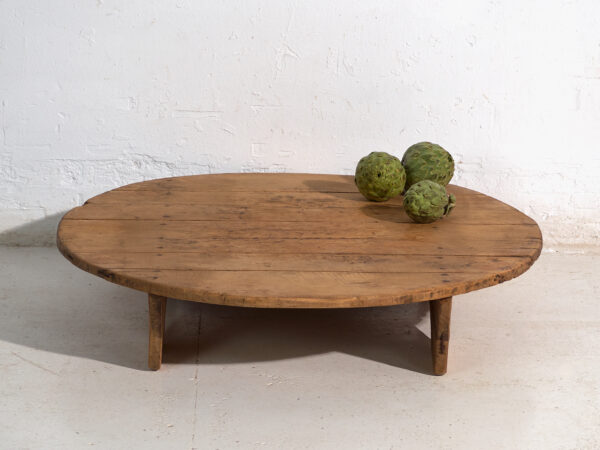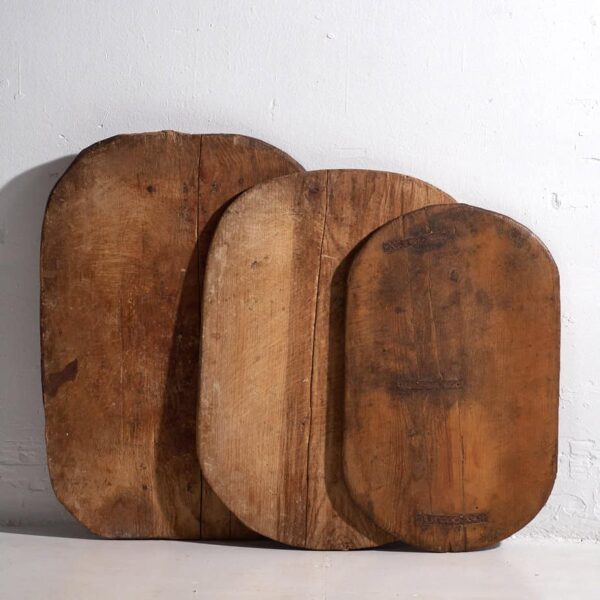


Antique cutting board in solid wood, Central European rural utensil originating from Central Europe and dated circa 1920. Originates from Central Europe, from the early 20th century, where cutting boards were carved from solid wood for everyday domestic use.
In the rural kitchens of Central Europe, cutting boards were part of the daily utensils: they were used to knead bread, cut meat, slice vegetables or serve cold meats on the table. Their thickness and density allowed them to absorb years of use without breaking.
Built in solid wood, carved from a single block or two planks joined edge to edge, with a shaped profile and an integrated handle on some pieces. The thickness is generous and the edges softened by use. The carpentry is direct, characteristic of rural domestic ware.
The patina retains the deep tone of aged wood, with knife marks, stains and traces of intensive use integrated into the surface. Grain and knots are visible. The board retains its original density and solidity.
It fits naturally in contemporary rustic kitchens, wabi-sabi spaces and decorative compositions. It works as a serving board, a decorative base for a table or a display piece on a sideboard. The mark of prolonged use gives it a singular narrative character.
Details
- Dimensions: Length 62 cm – Width 63 cm – Height 12 cm
- Style: Central European rustic
- Materials and techniques: Solid wood carved from a single piece or planks joined edge to edge, natural finish aged by use
- Place of origin: Central Europe
- Period: Early 20th century (circa 1920)
- Date of manufacture: Circa 1920
- Condition / Notes: Sound piece. Marks of use, stains and cuts integrated into the wood. Wear consistent with age and use.
This piece is part of the collection of Amaru Antiques, Barcelona.
ONE OF A KIND PIECE