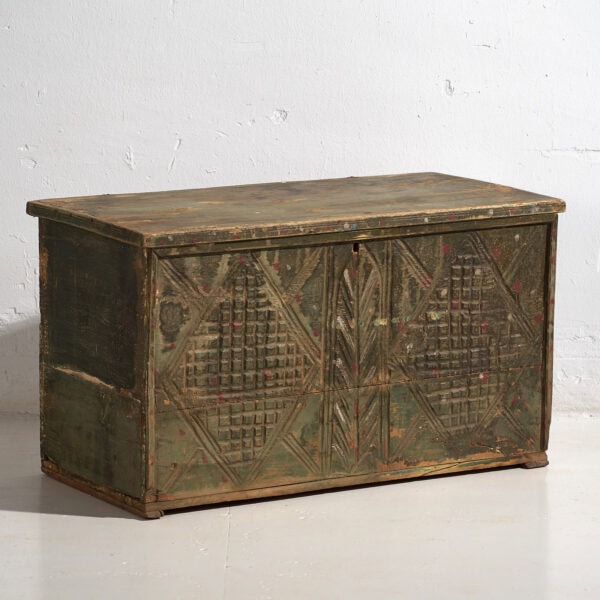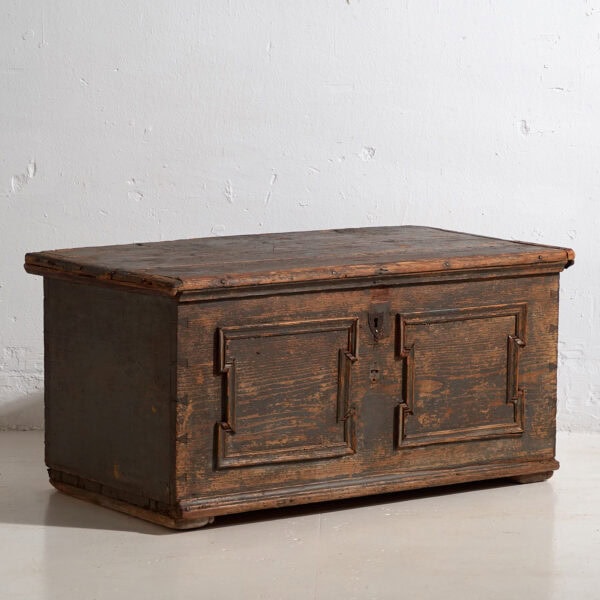


This antique painted trunk in pine wood features a closed rectangular structure with hinged lid, hand-forged iron hinges and latch and a central pictorial panel with three female figures in a courtly scene, framed by floral borders. It originates from northern China, from the late Qing dynasty, where pine was worked using mortise-and-tenon joinery and finished with polychrome paint over a natural lacquer ground.
In traditional Chinese furniture, painted trunks were trousseau pieces — part of the bridal dowry — and stored textiles, festival clothes, documents and personal items inside. The painted decoration on the front, sides and lid was a statement of domestic prosperity and a vehicle for family auspicious symbolism.
The body is built in solid pine. The structure is a closed rectangular volume with a hinged lid mounted on hand-forged iron hinges, with a central iron latch. The joinery is mortise-and-tenon over an internal frame and the sides finish in a small lower moulding. The interior keeps the bare pine, while the exterior is fully painted.
The front panel holds an exceptional figurative scene: three female figures in traditional dress under an ornate canopy, one seated with a musical instrument and two standing, over an interior architectural ground. The scene belongs to the Chinese courtly iconography repertoire (ladies of court) and is associated with feminine virtues, marital harmony and domestic prosperity. The palette combines reds, greens, pinks and cobalt blue over a dark ground, with floral perimeter borders and auspicious motifs in vases.
With its contained size — around 85-90 cm in length — this trunk works as a bedside table, an auxiliary table or a central decorative piece in an entrance. It suits wabi-sabi, contemporary rustic, japandi and Asian-inspired interiors, where it brings a historical and narrative accent.
Details
- Dimensions: Length 85 cm – Width 55 cm – Height 58 cm
- Style: Qing Dynasty
- Materials and techniques: Solid pine; hand-forged iron hardware; mortise-and-tenon joinery; painting over natural lacquer ground.
- Place of origin: China
- Period: Late Qing dynasty
- Date of manufacture: Circa 1900
- Condition: Good. Original paintwork and patina preserved with honest wear. Wear consistent with age and use.
This piece is part of the curated collection of Amaru Antiques, Barcelona.
ONE OF A KIND PIECE