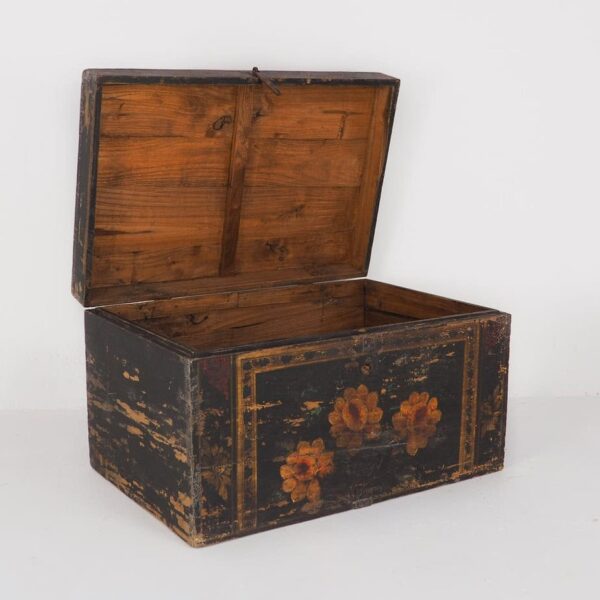


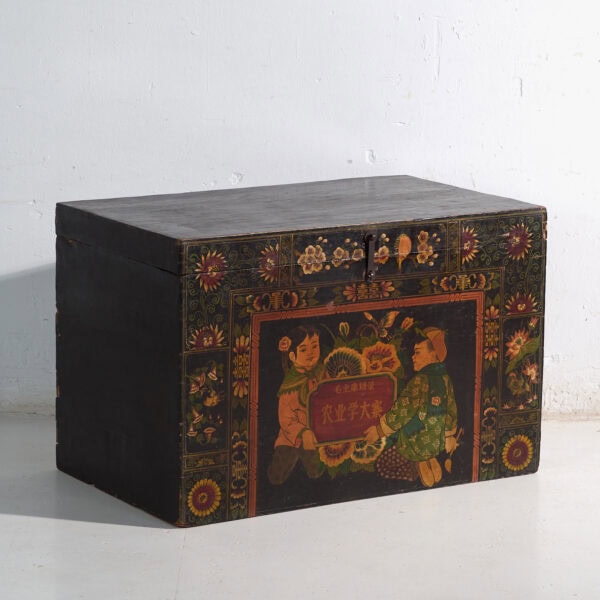


This antique painted trunk in pine wood features a closed rectangular structure with hinged lid, hand-forged iron hinges and latch and a pictorial composition with a human figure on the central panel and chrysanthemums on the upper border. It originates from northern China, from the late Qing dynasty, where pine was worked using mortise-and-tenon joinery and finished with polychrome paint over a natural lacquer ground.
In traditional Chinese furniture, painted trunks were trousseau pieces — part of the bridal dowry — and stored textiles, festival clothes, documents and personal items inside. The painted decoration on the front, sides and lid was a statement of domestic prosperity and a vehicle for family auspicious symbolism.
The body is built in solid pine. The structure is a closed rectangular volume with a hinged lid mounted on hand-forged iron hinges, with a central iron latch. The joinery is mortise-and-tenon over an internal frame and the sides finish in a small lower moulding. The interior keeps the bare pine, while the exterior is fully painted.
The front panel holds a pictorial composition with a human figure — scholar or courtier — among painted vegetation, dressed in traditional costume and represented in a garden scene. Above the panel runs a border with orange and green chrysanthemums (ju 菊). Compositions with solitary figures in a garden belong to the literati register of the Chinese iconographic repertoire and evoke contemplative retreat and harmony with nature. The palette combines ochre, green, red and black strokes over a dark ground.
With its contained size — around 85-90 cm in length — this trunk works as a bedside table, an auxiliary table, a low bench at the foot of a bed or a central decorative piece in an entrance. It suits wabi-sabi, contemporary rustic, japandi and Asian-inspired interiors, where it brings a historical and narrative accent.
Details
- Dimensions: Length 88 cm – Width 54 cm – Height 58 cm
- Style: Qing Dynasty
- Materials and techniques: Solid pine; hand-forged iron hardware; mortise-and-tenon joinery; painting over natural lacquer ground.
- Place of origin: China
- Period: Late Qing dynasty
- Date of manufacture: Circa 1900
- Condition: Good. Original paintwork and patina preserved with honest wear. Wear consistent with age and use.
This piece is part of the curated collection of Amaru Antiques, Barcelona.
ONE OF A KIND PIECE